
 International

If your SEO content audit keeps surfacing pages that rank for similar terms but none of them ranks well, you likely have a cannibalisation problem, not a content volume problem. Adding more pages won't fix it. The issue is that your existing pages are splitting authority, diluting engagement signals, and teaching search engines that no single URL owns the topic. The fix is structural: consolidate, redirect, and map ownership going forward.
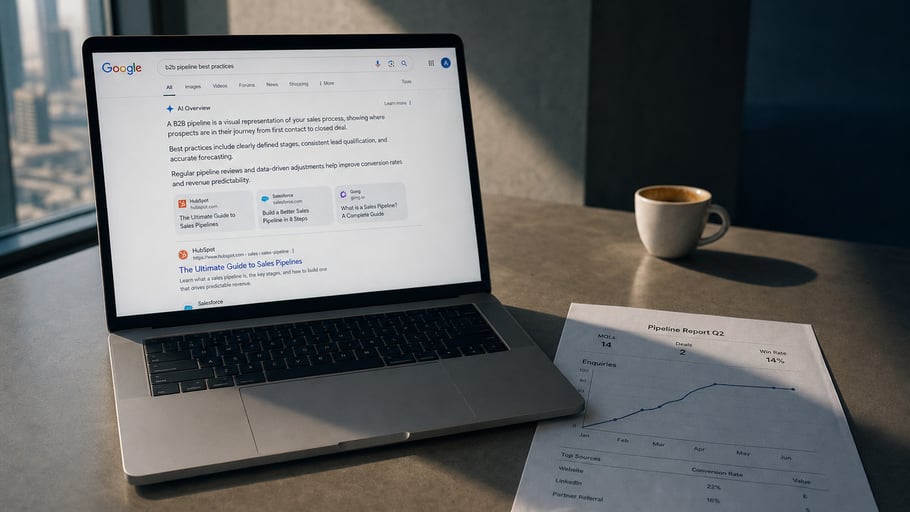
This matters more now than it did two years ago. When multiple pages cover the same topic, AI systems like ChatGPT and Perplexity struggle to identify which page best represents your definitive perspective. That confusion doesn't just cost rankings. It costs AI citation visibility too, and that's a channel you can't afford to cede.
The Real Cannibalisation Test: Intent Overlap, Not Just Keywords
The instinct is to search for pages sharing the same keyword phrases. That catches the obvious cases, but it misses the harder ones. Two pages can target completely different keyword strings and still cannibalise each other if they serve the same underlying search intent. A page titled "How to reduce employee churn" and another titled "Staff retention strategies for manufacturers" may share zero exact keywords, yet they answer the same question for the same person at the same moment. That's the real test.
According to Ahrefs' own guidance, cannibalisation is only worth fixing when very similar pages are genuinely competing for the same query and intent, and when consolidating them would actually improve performance, not simply whenever a keyword tool flags overlap. Ahrefs recommends checking Site Explorer's Organic Keywords report with the "Multiple URLs only" filter to see exactly which queries have more than one of your own pages competing, then reviewing ranking history before you act. These behavioural signals should trigger a fix, not keyword tool overlap alone. Pull your position-tracking data, look for instability across competing URLs for the same queries, and focus there.
Not Every Content Overlap Is a Cannibalisation Problem
Before you start deleting or merging, be clear on what actually constitutes a problem. Two pages can cover adjacent territory without competing. A how-to guide, a vendor comparison page, and a service page can all target similar themes and coexist cleanly because they serve different intents and different funnel stages. A user searching "how to run a content audit" wants a process. A user searching "content audit services" wants a vendor. Google distinguishes between these, and so should you.
The most common overcorrection in a content audit is treating any topical overlap as cannibalisation and deleting pages that were actually performing complementary roles. Blind deletion removes content that may carry backlinks, conversion history, or authority signals you won't easily recover. The test is always: do these pages satisfy the same search intent, for the same user, at the same moment? If the answer is genuinely yes, that's when you act.
The Core Fix: Consolidate, Merge, Redirect
Once you've confirmed true cannibalisation, the resolution has three steps: pick a winner, build the definitive version, and redirect everything else into it.
- Pick the survivor. Choose the URL with the strongest combination of backlinks, rankings history, and on-page engagement. This is your canonical version going forward.
- Merge the best elements. Pull the strongest sections, data, examples, and structured content from the competing pages into the survivor. The goal is one page that's more authoritative than any of the originals individually.
- 301 redirect the rest. As Semrush explains, a 301 redirect passes most of the original page's SEO value to the new URL, so link equity and authority consolidate rather than disappear. Don't use a 302 here; that signals a temporary move and won't consolidate ranking signals.
One structural note on redirects: Semrush's own guidance on 301 vs 302 redirects flags that 301s are permanent and will cause search engines to consolidate pages, which is exactly what you want in a cannibalisation fix but exactly what you don't want during an A/B test. Keep that distinction clear when your development team is implementing. Temporary moves use 302s; consolidation uses 301s.
After the redirect is live, update your internal links. Any page on your site still pointing to the old URL should point to the survivor. This isn't just housekeeping. Internal links are intent signals, and having them scattered across redirected URLs weakens the transfer of authority.
Build the Preventive Layer: A Keyword and Topic Ownership Map
Fixing existing cannibalisation is only half the work. Without a structural process for what gets published next, the same problem recurs within 12 months, especially in organisations where multiple teams or agencies contribute to the content calendar.
A topic ownership map is the practical solution. It's a living document, typically a shared spreadsheet or a CMS taxonomy, that assigns a single owner to each combination of topic and intent. Before any new piece of content is briefed, the author or strategist checks whether that intent is already covered. If it is, the brief either gets killed, redirected toward a genuinely adjacent angle, or used to update the existing page rather than create a new one.
- Map columns: primary intent, target keyword cluster, assigned URL, funnel stage, last reviewed date.
- Flag any new brief that shares intent with an existing entry before it's approved.
- Review the map quarterly, not just when a problem surfaces.
This is unglamorous work, but it's the difference between a one-time audit and a permanent improvement to your content strategy optimisation process. Most teams skip it because it requires editorial governance, not just execution. That's exactly why it works as a competitive advantage.
Why Is Content Cannibalisation More Urgent in the AEO Era?
Search engine rankings have always penalised split authority. But the stakes have shifted with the rise of AI-powered answer engines. When ChatGPT, Perplexity, or Google's AI Overviews look for a source to cite on a given topic, they evaluate which page offers the clearest, most authoritative, and most complete perspective on that topic. If you have three pages that each partially address the same question, none of them signals sufficient authority to be cited. The AI picks someone else.
This makes duplicate content and keyword overlap issues a revenue problem, not just a rankings problem. Enterprises in competitive verticals, particularly healthcare, professional services, and SaaS, are increasingly finding that AI citation is driving qualified traffic that never touches a traditional search result. Cannibalisation is one of the most direct ways to exclude yourself from that visibility, and it's one of the most fixable.
The consolidation approach described above addresses both problems simultaneously. One authoritative, well-structured page that covers a topic completely is more likely to rank, earn backlinks, and be cited by AI systems than three fragmented pages that each cover a third of the story.
Covering More Ground vs Cannibalising Yourself
There's a useful distinction worth making for any team that's been told to build topical authority by covering adjacent sub-topics. Expanding into genuinely new territory, meaning new questions, new angles, new user intents, is the opposite of cannibalisation. The mistake is duplicating the same topic under different titles. Covering a wider one is a strength.
If you publish a guide on "content strategy for SaaS companies" and later publish "content planning for B2B SaaS growth teams," you've created a problem. If instead you publish "content strategy for SaaS companies" and later publish "how to measure content ROI in SaaS," you've expanded your footprint without competing with yourself. The practical test: could a user need both pages in the same research session, for different reasons? If yes, they're complementary. If they'd only ever need one, you have duplication.
What a Practical SEO Content Audit Workflow Looks Like
| Stage | Action | Output |
|---|---|---|
| 1. Surface candidates | Run position tracking reports; flag URLs competing for the same queries | Cannibalisation candidate list |
| 2. Intent audit | Manually review flagged pairs for true intent overlap | Confirmed problem list vs. benign overlaps |
| 3. Pick survivors | Evaluate backlinks, traffic, rankings history per URL | Canonical URL per topic |
| 4. Merge and strengthen | Combine best content into the survivor; update on-page signals | Consolidated, improved pages |
| 5. 301 redirects | Redirect all losing URLs to the survivor | Consolidated link equity |
| 6. Internal link update | Repoint all internal links to the canonical URL | Clean site architecture |
| 7. Topic map update | Record the canonical URL and intent in the ownership map | Prevention layer in place |
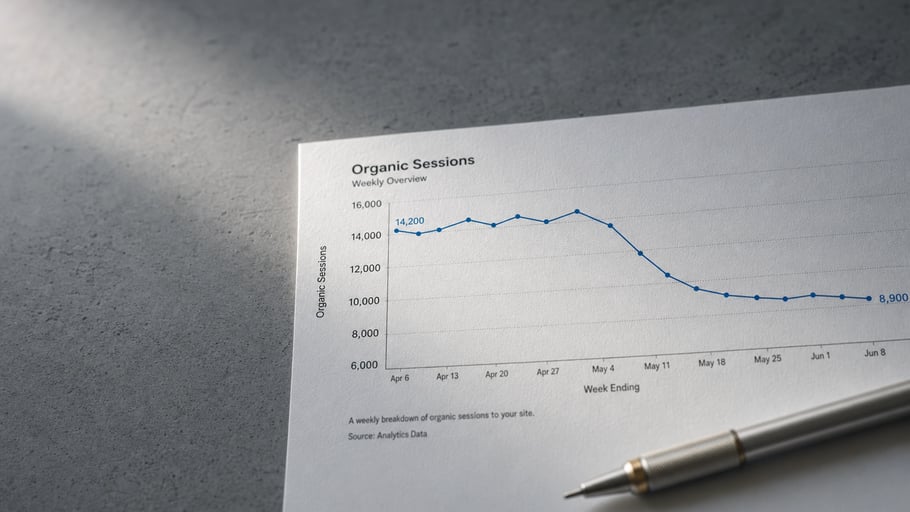
Cannibalisation rarely fixes itself, and search performance will continue to stagnate until the underlying architecture is corrected. The good news is that consolidation typically produces measurable ranking improvements within 60 to 90 days as authority concentrates into a single URL. That's a fast return for work that, once done properly, also lays the foundation for sustainable content strategy optimisation.
If you're working through this process and want a clearer view of where your content estate stands before you start merging, the right starting point is a structured content audit, not another round of publishing.