
 International
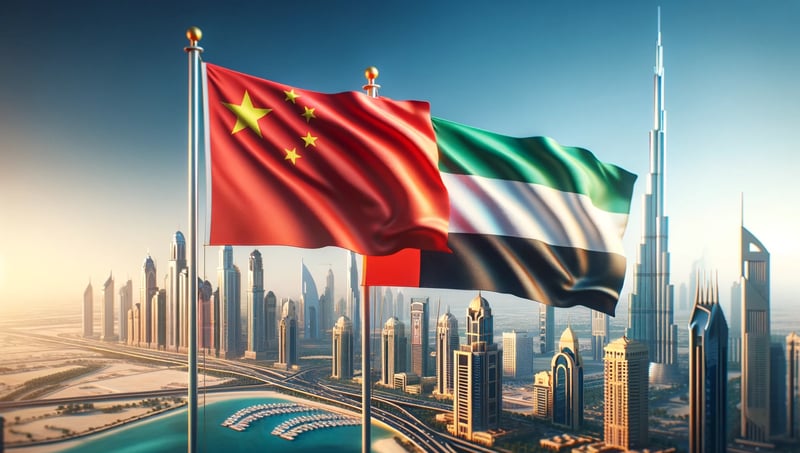

Most China marketing plans pitched to UAE firms are still a Baidu campaign with a WeChat account bolted on. That plan is five years out of date. For UAE B2B firms, the Chinese marketing platforms that matter now are Xiaohongshu, Baidu, WeChat, Douyin, and Chinese AI influence (DeepSeek, Doubao, Yuanbao, Qianwen, Kimi, etc.), with Zhihu, Bilibili and Weibo in supporting roles, and you can advertise on most of them without a Chinese company.
What changed: the walled gardens survived, but the front door moved
One thing hasn't changed: China's platforms are walled gardens. Xiaohongshu posts rarely show up in Baidu, and WeChat articles stay inside WeChat, so the best strategy is still to be found on several platforms at once. What has changed is which platforms matter most:
- Baidu now handles under half of China's searches. It holds 46.65% of all-device search share in China (and 60% on mobile), but search time is leaking into AI.
- Xiaohongshu has passed 400 million monthly active users and handles roughly 800 million searches every day, making it the default place Chinese consumers research high-stakes decisions.
- More than 700 million people in China use generative AI. Doubao 419 million MAU, Qwen 158 million, DeepSeek 123 million. ChatGPT is not available in mainland China.
Picture a founder in Shenzhen weighing a move to a Dubai free zone. She searches Dubai company set-up on Xiaohongshu, reads relocation write-ups from founders who already made the move, and saves three advisers worth contacting. She asks DeepSeek to compare free zones side by side. When she wants to verify a specific firm, she runs its name through Baidu. Then she opens WeChat to check that firm's WeChat official account to learn more and adds the adviser, and the conversation that closes the deal happens there.
Five platforms, one decision, and each one earns its place at a different stage.
What are the top Chinese marketing platforms for UAE businesses?
We rank these by where to invest first to generate and capture B2B demand. Raw user numbers don't set the order, and neither does what a Chinese agency happens to sell.
| Platform | Scale (2026) | Best for UAE B2B | How a UAE firm gets in |
|---|---|---|---|
| 1. Xiaohongshu (RedNote) | 400M+ MAU; ~800M daily searches | Research and decisions before a major purchase | Cross-border Juguang ad account with your overseas business licence |
| 2. Baidu | 46.65% search share; 60% mobile | High-intent search and brand-term defence | Authorised agency or Baidu International |
| 3. WeChat | 1.44B monthly users | Owned content, enquiries, and lead nurturing | Verified overseas Official Account (Service Account) |
| 4. Douyin | ~1.0B MAU | Video, events, travel | Verified overseas enterprise account; paid reach via a local partner |
| 5. Chinese AI assistants | Doubao 419M, Qwen 158M, DeepSeek 123M MAU | Direct answers and recommendations | Earned through content on the platforms above |
| 6. Bilibili | 376M MAU; avg. user age 26–27 | China's YouTube; young, technical audiences | Creator partnerships |
| 7. Weibo | 561M MAU, declining | Brand and news publishing | Verified overseas enterprise account |
| 8. Zhihu | MAU no longer disclosed; peaked at ~105M in 2023 | China's Quora; organic credibility and search signals | Organic expert answers |
1. Xiaohongshu: where Chinese buyers decide
Xiaohongshu (小红书, Little Red Book/RedNote) is where Chinese buyers research big decisions, from travel and education to investment and choosing an adviser. Calling it a beauty app is like calling LinkedIn a CV site. 400 million+ MAU and around 800 million searches per day, and advertising made up an estimated 76% of its 2025 revenue, up from 65% two years earlier. Overseas companies can advertise directly through Juguang, its ad platform, using their own business registration. What works is creators, feed ads and search ads running together.
DMCC, one of our clients, gave us the clearest proof on its China roadshows. Returns from WeChat and Weibo were flattening, so Xiaohongshu became the lead channel. In the next round, Xiaohongshu ads drove 29% of all registrations and cost per lead fell 37%. The first campaign generated more private messages than DMCC's team could answer, so later campaigns automatically sent registration links.
If you sell a high-consideration service to Chinese buyers and you aren't on Xiaohongshu, your competitors are answering their questions for you.
2. Baidu: the high-intent search channel
Baidu still earns its budget on Chinese-language searches from buyers who already know what they need. Its everyday role is shrinking: monthly use of search engine apps in China fell 19.1% year on year as AI assistants took over, according to QuestMobile. So skip the large open-ended Baidu budget. The correct strategy is to defend high-intent keywords and your brand terms, and open the account through the right route. That is how we run Baidu Ads for UAE clients.
3. WeChat Official Account: your owned channel inside the world's busiest app
For B2B, the WeChat asset that matters is a verified WeChat Official Account, and for most businesses specifically a Service Account. A personal profile won't do the job. Think of it as your website and email list compressed into a single app that Chinese buyers already open every day.
WeChat is where Chinese leads get captured and nurtured after the first click. A verified Service Account lets you collect enquiries, send articles and answer questions in the app Chinese buyers already live in. WeChat has 1.44 billion monthly users, and its built-in search reaches into Official Account articles, so those articles get found. Every serious China plan needs one.
4. Douyin: video, events and travel
Douyin is China's TikTok, has roughly 1 billion MAU, and its search bar is increasingly treated as a search engine by younger users. For travel and hospitality, it's essential. For other B2B firms, it works for founder-led video and event promotion. Overseas companies can verify an enterprise account, and paid reach into mainland China runs through a local partner.
5. Chinese AI assistants: the new front door
Chinese AI assistants are fast becoming the first place Chinese buyers ask for a recommendation, and ChatGPT isn't one of them. As of September 2026, Doubao (ByteDance) has 419 million MAU, Qwen (Alibaba) 158 million, and DeepSeek 123 million, with Baidu's Ernie built into the Baidu app. Each assistant draws on its parent ecosystem: Doubao on Douyin, Yuanbao on WeChat, Ernie on Baidu.
The practical implication: the content you build on platforms 1–4 is exactly what earns AI visibility. This is generative engine optimisation (GEO). No one can guarantee a ranking in Doubao or DeepSeek, and anyone who promises one is selling guesswork. If your "AI visibility report" only covers ChatGPT and Google, it is blind to the Chinese market.
6. Bilibili: young, technical audiences
Bilibili is China's long-form video platform for under-35s, and it earns a place in a UAE plan if you recruit Chinese talent or sell education or technology. It started as an anime community and grew into the place young Chinese go to learn: coding tutorials, university advice, product teardowns and study-abroad vlogs all do well there.
That makes it useful for UAE universities and training providers recruiting Chinese students, and for tech firms in places like Dubai Internet City that want Chinese engineers to know their name. The way in is creator partnerships: Bilibili's creators (UP主) have loyal, comment-heavy followings that switch off at anything that feels like an advert, so a ten-minute explainer from a respected creator carries more weight than any banner ad. Paid ads come second, once creators show the audience is there.
7. Weibo: China's public square
Think of it as China's public square, closer to X (Twitter). Don't write Weibo off. It is China's largest open, public social platform, and it does a job none of the closed ecosystems can: it is where Chinese netizens follow breaking news, official announcements, and the real-time Hot Search list.
Weibo sits at the top and middle of the funnel: it builds awareness and interest, not direct B2B leads, and it offers the most affordable paid reach of any major Chinese platform. Overseas companies typically set up a Blue V account through overseas verification or a certified agency, then pair owned content with KOL partnerships. Treat it as your open, public layer, the place a brand gets into the conversation, while the closed platforms handle trust and conversion.
8. Zhihu: where your credibility gets checked
Zhihu is where Chinese buyers go to check whether you know what you're talking about. Ten excellent answers to the questions your buyers ask will do more for a UAE firm than any Zhihu ad budget. Zhihu's own marketing services revenue fell by more than a third between 2022 and 2024, so put the effort into answers.
What do UAE firms get wrong about Chinese marketing platforms?
Most mistakes come from mapping China onto the Western stack. These five assumptions cost UAE firms the most.
- "Baidu is China's Google." It's still the biggest single search engine, but it now shares the job with WeChat, Douyin, Xiaohongshu and AI assistants. On desktop, Bing overtook it in 2023.
- "We need a Chinese company before we can advertise." On most major platforms, you don't.
- "WeChat ads will reach Chinese people in the UAE." Moments ads only serve users in mainland China.
- "Xiaohongshu is a beauty app." It's where Chinese buyers research travel, investment, education and professional services.
- "AI search means ChatGPT and Google." ChatGPT isn't officially available in mainland China.
Can a UAE company advertise in China without a Chinese entity?
Yes. "You need a Chinese company first" is the most expensive myth in China marketing. Xiaohongshu, WeChat, Baidu and Douyin all have routes for overseas companies, as the table above shows.
Three rules apply wherever your company is registered: ICP filing if you host in mainland China, PIPL if you collect data from people in China, and China's Advertising Law for anything you claim in Chinese. We check all three before any campaign launches.
Which platform should a UAE B2B firm start with?
Start with your goal. Here's where we'd begin.
| Your goal | Lead with | Support with | Skip |
|---|---|---|---|
| Attract Chinese investors or founders to a UAE free zone | Xiaohongshu | Baidu brand campaign, WeChat, Zhihu | Weibo ads |
| Win B2B clients in mainland China | Baidu, WeChat Search | Xiaohongshu, Zhihu | Bilibili |
| Reach Chinese travellers and high-value visitors | Xiaohongshu, Douyin | Zhihu | |
| Fill events and roadshows in China | Xiaohongshu ads | WeChat, HuoDongXing, Weibo | Zhihu |
| Hire or sell to young technical talent | Xiaohongshu, Bilibili, Douyin | Zhihu |
Start where your Chinese buyers decide
Pick the platform where your buyer decides, then build everything else around it.
Oxygen runs China digital strategy for UAE firms from Dubai, Hong Kong and mainland China, in English, Arabic, Mandarin and Cantonese. We wire every lead into HubSpot, so you can see what turns into pipeline. If the honest answer is "most of them", book a 15-minute call with our China team.
FAQs on Chinese marketing platforms for UAE businesses
Allow three to four weeks before your first campaign runs. WeChat Service Account verification typically takes 15 to 20 working days, and Douyin enterprise verification takes 7 to 15 working days after the initial review. Xiaohongshu ad accounts opened through an official cross-border agency are usually the quickest, so start there if you need to launch fast.
No. Most UAE firms don’t need one because Xiaohongshu, WeChat, and Douyin can take a buyer from first view to an enquiry within the platforms. Hosting in mainland China requires an ICP filing, which needs a Chinese entity. If you want a Chinese-language site without one, host it in Hong Kong or Singapore and remove Google services such as Fonts, Maps and reCAPTCHA, which load slowly or not at all in China.