
 International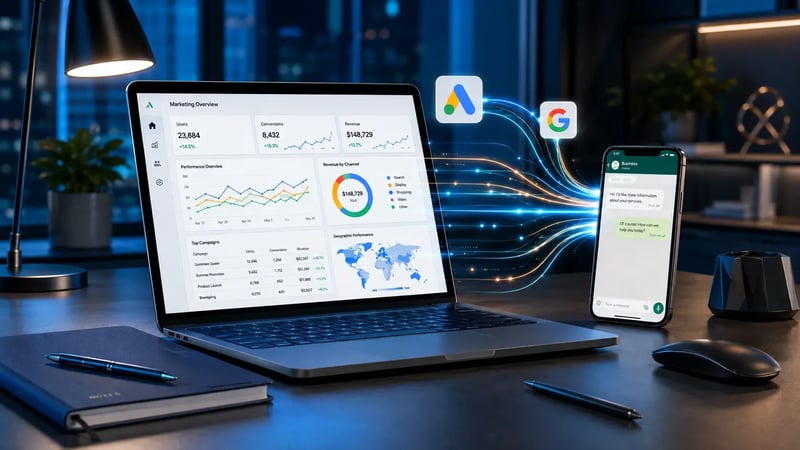
Ask a marketing team in Dubai which Google Ads campaign produced last month's WhatsApp enquiries and you will usually get a shrug. Nobody was careless. Google Ads tracking works exactly as designed right up until someone leaves the browser, and WhatsApp passes no referrer data by design, so the trail ends at the app boundary.
The cost of that is real, and it compounds. Cost-per-lead comes out wrong. Campaigns get paused for looking expensive when they were doing fine. Budget moves for reasons that have nothing to do with performance.
Why Do WhatsApp Leads Show Up as Direct Traffic?
Because WhatsApp passes no referrer data to your website or analytics. When a visitor leaves the browser for the app, the tracking chain ends at that handover, and GA4 files them under direct traffic with no campaign attached.
Compare it to a form fill. Someone clicks your ad, lands on the page, submits the form, and the tracking survives the whole trip. Google's auto-tagging appends a Google Click Identifier (GCLID) to your destination URL, carrying the campaign and click detail behind that visit. GA4 reads it. Google Ads books a conversion. Everyone knows what happened.
Tap the WhatsApp button instead, and you paid for the visit but lost the receipt.
Marketers call this dark social. In most markets it is a small leak. In the UAE it is a hole in the floor, because WhatsApp is where commercial conversation actually happens here and a messaging button sits on nearly every B2B landing page in the country. You can run tight campaigns with immaculate tagging and still have no idea which ads produce pipeline.
Do Click-to-WhatsApp Ads Track Attribution?
Halfway. Google offers a WhatsApp message asset that logs a conversion when someone taps it and opens a chat, which tells you a conversation started and nothing beyond that.
Even Meta only solves the first half, and Meta owns WhatsApp. Tap a click-to-WhatsApp ad, send the first message, and a click identifier arrives with it that links the chat to the exact ad that produced it, with nothing to configure. That is the hard problem solved for free. What Meta still cannot see is what happened next.
So on either platform, a conversation that became a signed deal and one that died after two messages look identical in the reporting, and the ad account keeps optimising for chats opened. Campaigns run on conversation starts tend to produce more conversations and worse leads over time.
Closing it means sending the outcome back once a lead actually qualifies, which is the job of a connected WhatsApp Business API platform such as SleekFlow or Wati. Coverage differs by ad platform, so check current documentation before committing to one.
And none of it covers the far more common path anyway: a search ad lands someone on your website, and they tap a WhatsApp button once they are there. That click reaches your landing page and stops. Nothing carries across on its own, and this is where most UAE search budget actually sits. Closing that gap is what the rest of this article is about.
How Do You Track Google Ads Leads That Convert on WhatsApp?
Capture the click data on your landing page before the visitor taps through, store it against that contact, then sync the conversation into your CRM with the campaign still attached. That chain is what WhatsApp lead tracking actually consists of. You cannot tag a conversation once it has started, so everything hangs on the few seconds before it does.
- Confirm auto-tagging is on and add UTM parameters to your Google Ads destination URLs. GCLID gives Google machine-readable click data. UTMs give you readable campaign labels in your own reports. Run both.
- Have the landing page read those values on load and hold them in the session, a cookie, or a hidden field. Test the full URL path first. Shorteners and redirect chains eat GCLIDs far more often than they eat UTMs, and you will not notice until the data is already missing.
- Attach the stored values to the WhatsApp handoff. The data never enters WhatsApp. It gets recorded on your side, against that visitor, in the moment before they leave the page.
- Log the conversation as a CRM record. The WhatsApp Business API platform captures the thread as a structured contact and syncs it into HubSpot or Salesforce, so the enquiry stops living on one salesperson's personal phone. Some setups need a middleware layer to close the loop with Google, so confirm that before you build around it.
A caveat on that last layer, because it gets oversold. It turns a conversation into a record you can attribute. It cannot rebuild what WhatsApp already threw away. Feed it patchy tagging, and you get patchy attribution.
Does Fixing Your Reporting Fix Your Bidding?
No. Getting attributed WhatsApp leads into HubSpot fixes what you can see. Google Ads carries on bidding blind until you send those conversions back to it.
Smart Bidding learns from whatever conversions you feed it. If the only conversions it ever receives are form fills, it quietly optimises toward the minority of people who prefer forms and away from everyone who would rather message you. Your best leads never enter the model at all. Worse, the algorithm gets more confident about the wrong answer every week.
Because the GCLID sits on the contact record, you can push the conversion back once a lead actually qualifies, whether that threshold is a booked viewing or a signed deal. Google matches it to the original click. Bidding starts chasing revenue.
One limitation to plan around: HubSpot's native ads tool cannot attribute contacts from Performance Max or YouTube campaigns and reports only clicks and impressions for them. Check where your budget actually sits before assuming the integration has you covered.
What Changes When WhatsApp Attribution Works?
Cost-per-lead becomes accurate, keyword-level return becomes visible, and Google Ads starts optimising toward leads that close instead of leads that fill in forms.
Put rough numbers on it. Say you spend AED 60,000 a month on search, book 40 form fills, and calculate a cost-per-lead of AED 1,500. Painful, and the temptation is to cut. Then WhatsApp attribution goes live and reveals another 90 conversations from the same spend, at which point the real figure is closer to AED 460. Nothing about the campaign changed. Only your ability to see it did.
| Without attribution | With attribution |
|---|---|
| Cost-per-lead calculated on form fills alone | WhatsApp contacts counted and correctly attributed |
| Strong campaigns look expensive and get paused | Keyword-level return visible before you touch the budget |
| No view of which ad groups drive qualified pipeline | Lead quality tied to deal stage and revenue in the CRM |
| Smart Bidding trained on unrepresentative conversions | Offline conversion import teaches bidding what a good lead looks like |
| WhatsApp leads live in conversations | Every lead carries source, campaign and lifecycle stage |
Trace a closed deal back to the search term that started it, and you can make calls most Dubai advertisers cannot. Which keywords deserve a higher bid because they bring buyers. Which ad groups deliver plenty of noise and no revenue.
Forecasting gets easier for the same reason. Projecting the return on extra spend needs the close rate and average deal value for a given campaign, which is precisely what the WhatsApp gap deletes.
How Do You Set Up Google Ads Conversion Tracking for WhatsApp Leads?
Five steps, and the hard part is rarely technical. Paid media, the website and the CRM usually belong to three different people who have never once sat in a room and agreed how a lead gets labelled.
- Audit UTM discipline across live campaigns and confirm auto-tagging is enabled. Sloppy naming breaks reporting even when the technical setup is sound.
- Capture GCLID and UTM values on the landing page before any WhatsApp CTA fires.
- Route WhatsApp through a shared, CRM-connected inbox. A conversation nobody can see is a conversation nobody can attribute.
- Map campaign source fields through to deal creation in HubSpot, so attribution reaches your revenue reports and does not stall on the contact record.
- Set up offline conversion import so qualified WhatsApp leads feed back into Google Ads.
Can You Trust Your Google Ads ROI in Dubai Right Now?
Probably not. If your leads arrive by WhatsApp and your tracking stops at the click, you are setting budgets on data that misses most of your conversions. The campaigns might be doing better than the dashboard says. They might be doing considerably worse once lead quality is priced in. There is no way to know which until the loop closes.
The three systems already exist in most mid-size businesses: an ad account, a landing page, a CRM. Wiring them together with one consistent data model turns spend into something traceable: every dirham reaches a contact, and every closed deal points back to the campaign that started the conversation.
Otherwise, you are back to the shrug: a phone full of good conversations and no way to tell which half of the budget earned them, which is the same disconnect that loses deals further down the funnel.